


Vacuum vs Argon: Which Wine Preserver Is Better?

Vacuum vs Argon: Which Wine Preservation Method Keeps Your Bottle Fresh Longer?
The moment you pull a cork, oxygen starts changing your wine. A little air opens it up; too much, over a few days, turns it flat, dull and eventually sour. That is why a bottle that tasted great on Friday can taste tired by Sunday.
And there is a lot of oxygen to fight. Pour half a bottle and you leave about 375 ml of air behind, roughly a fifth of it oxygen. That's plenty to change the wine overnight.
Most wine preservation tools fight oxygen in one of two ways: they remove the air from the bottle (vacuum), or they cover the wine with a protective gas (argon). Both work, but they suit different drinkers. Here is how each one works, where each shines, and how to choose.
How Vacuum Preservation Works
Vacuum preservation takes oxygen away at the source. Instead of covering the wine and hoping the air stays put, it pulls the air out of the bottle and seals it. Less oxygen means slower oxidation, so the wine keeps its fruit, aroma and freshness for longer.
It's also the simplest approach to live with. There is no gas to buy, no capsules to change and no running cost, however many bottles you open.
- Manual hand pumps: a handy first step, but a hand pump never creates a perfect vacuum. How much air it removes depends on how well you pump and how tight the stopper is, and if the seal slowly loosens, air creeps back in without you knowing.
- Automatic vacuum systems: an appliance creates the same vacuum every time and holds it for you. Maître de Vin goes a step further with a built-in sensor that keeps track of the pressure inside the bottle, and when it senses the pressure rising, it automatically re-vacuums the bottle. Any air that sneaks in is removed before it can spoil the wine, with no pumping and no guesswork. Paired with chilling, this is vacuum preservation at its best.
How Argon Preservation Works
Argon is an inert, food-safe gas that is heavier than air. When it is added to a bottle, it settles on the surface of the wine and forms a protective layer that keeps oxygen away.
Wineries have used inert gases like argon, nitrogen and carbon dioxide for decades to protect wine in tanks and barrels. At home, though, one detail is often overlooked: argon is only about 38% heavier than air, so the "blanket" is not a lid. Over time it slowly mixes with the air in the bottle, which is why a well-sealed bottle matters as much as the gas.
Argon preservers come in two main styles:
- Spray cans: you spray a short burst into the bottle before re-corking. Simple and cheap, but it is hard to know how much gas you have added.
- Needle systems: a thin needle goes through the cork, the wine is poured out, and argon replaces it inside. Because the cork never comes out, the wine is barely exposed to air, which makes this approach strong for long-term, glass-by-glass access to collectible bottles.
Vacuum vs Argon at a Glance
| Vacuum (automatic, chilled) | Argon | |
|---|---|---|
| How it protects wine | Removes air from the bottle | Covers wine with an inert gas layer |
| Best for | Opened bottles you'll finish over the next week or two | Long-term access to special, corked bottles |
| Typical freshness | Up to 14 days* | Weeks or longer, depending on the system |
| Ongoing costs | None | Refill capsules or cans |
| Temperature control | Yes, when built into an appliance | No |
| Aeration | Can be built in | No |
| Ease of use | Place the bottle and forget it | Needs a refill and a routine each time |
*Based on Maître de Vin's vacuum-and-chilling system. Results depend on the wine.
The Factor Most People Miss: Temperature
Oxygen is only half of the story. Heat speeds up the chemical reactions that break wine down, so an opened bottle left on a warm counter fades faster than one kept cool, no matter how it is sealed.
Cold also slows the real villain behind sour wine. Acetobacter, the bacteria that turn wine into vinegar, need oxygen to work, and they are far less active in the cold. Remove the air and keep the bottle cool, and you tackle both at once.
This is why vacuum works best when paired with chilling. Taking the air out slows oxidation, and keeping the bottle cool slows it further. Temperature also shapes how the wine tastes when you pour it: a red served too warm tastes boozy and flat, and a white served too cold loses its aroma.
Argon and hand pumps leave temperature up to you, which usually means a separate wine fridge, or a guess.
Wine Preservation Myths and Surprises
- Surprise: some wines taste better on day two. Young, tannic reds often soften after a little air. The goal of preservation isn't to stop oxygen forever; it's to control how much, and when.
- Surprise: oxygen is sometimes added on purpose. In the early 1990s, winemakers in Madiran, France, developed micro-oxygenation, feeding tiny, measured doses of oxygen into tanks to soften tough tannins.
- Surprise: a few wines barely care. Madeira is deliberately heated and oxidized during winemaking, so an opened bottle can stay drinkable for months. Most still wines are far more delicate.
- Myth: putting the cork back in is enough. A re-corked bottle still has all that air trapped inside. Recorking stops spills, not oxidation.
Which One Is Right for You?
Choose Argon
Choose argon if you collect special bottles and want to taste them a glass at a time over months, without ever fully opening them.
Choose Vacuum with Chilling
Choose vacuum with chilling if you open everyday bottles and enjoy them over several days. You get no refills to buy, no routine to remember, and wine at the right temperature for every pour.
Where Maître de Vin Fits
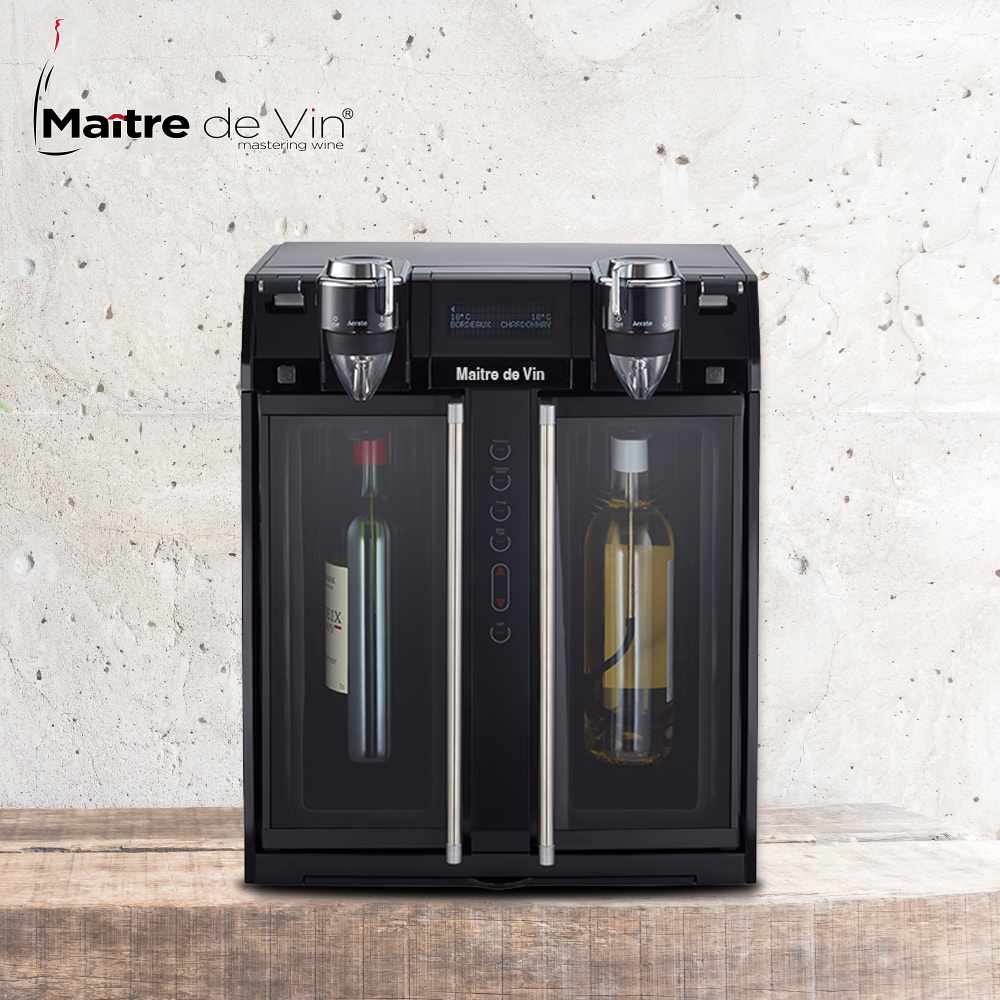
Maître de Vin is built for that second group. It combines automatic vacuum preservation with built-in cooling, so an opened bottle stays fresh for up to 14 days* without argon capsules.
- Vacuum + chilling: holds two opened 750 ml bottles, each in its own chamber
- Right temperature: 45°F–68°F (7°C–20°C), with 20 preset wine types
- Instant aeration: aerate on demand as you pour, or pour without it
- No consumables: no gas, no capsules, nothing to reorder
It's the difference between preserving wine and serving it well. Maître de Vin does both.
*Preservation time depends on the wine. Designed for still red, white and rosé wines.
Q&A
Is vacuum or argon better for keeping an everyday opened bottle fresh?
For bottles you plan to finish over the next several days, vacuum with chilling is the better fit. It removes air from the bottle, slows oxidation, and keeps the wine at a set temperature without refill capsules or cans.
When does argon make more sense than vacuum preservation?
Argon is most useful for special or collectible corked bottles that you want to taste one glass at a time over a long time. Needle-style argon systems can pour wine without fully removing the cork, which keeps air out.
Why is temperature so important after opening a bottle of wine?
Heat speeds up the chemical reactions that make wine fade, even if the bottle is sealed. Keeping wine cool slows oxidation and also lowers the activity of bacteria that turn wine into vinegar.
Does putting the cork back in the bottle preserve wine well enough?
No. Re-corking helps stop spills, but it does not remove the oxygen already trapped inside the bottle. That air can keep reacting with the wine and make it lose freshness.
Does Maître de Vin wine dispenser work only with corked bottles?
No. It works with both corked and screw-cap bottles, so it fits common red, white, and rosé bottles opened at home.
Sources
-
Iowa State University Extension — Oxidation in White Wine
Acetaldehyde, oxidation, oxygen exposure and spoilage. -
OIV — Argon
Official international oenological specification for argon. -
FIVS — Argon
Practical winemaking use of argon to replace oxygen in headspace. -
Oxford Companion to Wine — Winemaking and Temperature
Temperature and the 10°C/18° ```
TAGS:
